Before the Hand Moves: The Psychology, Discipline, and Quiet Strength of De-Escalation
True tactical mastery is rarely proven by how quickly you draw a tool; it is proven by whether you had the internal authority to never need it. De-escalation is not passive compliance or surrender—it is power under discipline, beginning where every critical decision is made: in the heart.
Most people enter self-defense training fixated on mechanics. They want to discuss draw strokes, split times, sight alignment, and gear selection. They want to know what their hands should do when chaos erupts on the street, in a parking garage, or at the local convenience store.
Those skills matter, and we teach them rigorously. But if your preparation starts and ends with your hands, you have misunderstood the nature of protection entirely.
The greatest tactical vulnerability you will ever carry into an encounter is not a slow draw; it is an unexamined ego. Long before physical violence takes shape, almost every human confrontation passes through a psychological and emotional funnel. The question is never simply what the other person is doing. The decisive question—the one that will determine your legal freedom, your physical survival, and your moral conscience—is what is happening inside your own chest in the seconds before anyone moves.
1. The Trap of the "Pride Check"
Take an honest inventory of how conflict actually presents itself in everyday life.
It rarely arrives like a movie script. It starts small: an aggressive merge in gridlock traffic on the Dan Ryan; an unprovoked insult muttered in a convenience store line; an aggressive stance from someone whose day was ruined long before they crossed your path.

Psychologists call these "status shocks"—moments where someone attempts to diminish your dignity in front of others. Instinct screams at us to reassert dominance, to correct the record, to have the last word. We confuse our dignity with our pride.
Here is the quiet reality: Pride is an expensive luxury in close quarters.
When an agitator steps into your space, they are inviting you into an emotional contract. If you accept the invitation—by squaring your shoulders, raising your vocal pitch, or returning contempt for contempt—you surrender control of the encounter. You hand the steering wheel over to the very person whose judgment you already know is compromised.
De-escalation begins with a deliberate, internal refusal to sign that contract. It is the recognition that an insult from a stranger carries zero authority unless your own insecurity validates it.
2. Power Under Control: Rethinking Meekness
In modern culture, de-escalation is often caricatured as weakness, timidity, or capitulation. People fear that by stepping back, softening their tone, or absorbing a slight, they are showing fear.
Ancient wisdom understands it differently. Across classical history and the sacred wisdom woven throughout biblical teachings, the concept often translated as meekness had nothing to do with being spineless or defenseless. The term was used to describe a war horse that had been fully trained for battle—tremendous speed, fierce power, and violent potential, yet completely responsive to the lightest touch on the rein. It was power submitted to purpose.

An ancient proverb captures this psychological reality with razor precision:
"He that is slow to anger is better than the mighty; and he that ruleth his spirit than he that taketh a city." — Proverbs 16:32
Anyone can lose their temper. Any untrained person can scream, posture, escalate, or panic. It requires no discipline whatsoever to let adrenaline dictate your conduct.
Real strength—the kind that marks a genuine protector—is the capacity to carry decisive capability while maintaining total command over your spirit. You do not de-escalate because you have no other choice; you de-escalate because you have the wisdom to recognize that walking away intact is always superior to winning an unnecessary contest.
3. The Anatomy of Tactical Restraint
De-escalation is not wishful thinking; it is an active tactical discipline governed by physiological laws.
Space Buys Cognitive Clarity
Distance is time, and time is judgment. When tension rises, an aggressive person's biological system floods with cortisol and adrenaline. Tunnel vision narrows their peripheral sight; auditory exclusion sets in; their prefrontal cortex (the seat of rational decision-making) begins to dim.
By taking half a step back—creating an extra yard of reaction space—you accomplish two things: you protect your physical perimeter, and you give their nervous system fewer physical threat cues to feed on.
The Mirror Principle and Vocal Cadence
The human brain is wired for mimicry. If someone yells at you and you match their volume and cadence, you accelerate their fight-or-flight response.
If, instead, you drop your voice one octave, slow your speech by twenty percent, and keep your sentences short and declarative, their neurobiology must adjust. As the proverb observes, "A soft answer turneth away wrath: but grievous words stir up anger." (Proverbs 15:1). A measured, calm cadence acts as a physiological brake on the room.

Hands Open, Base Balanced
Clenched fists and bladed postures signal combat before words are ever spoken. An open-hand posture—held naturally at chest or waist level, palms slightly angled outward—serves a double purpose. To the outside observer and the other person, it signals non-aggression and a desire to communicate. To you, it places your hands inside your primary defensive workspace without telegraphing hostility.
4. A Lesson in Self-Examination: Where Is Your Heart?
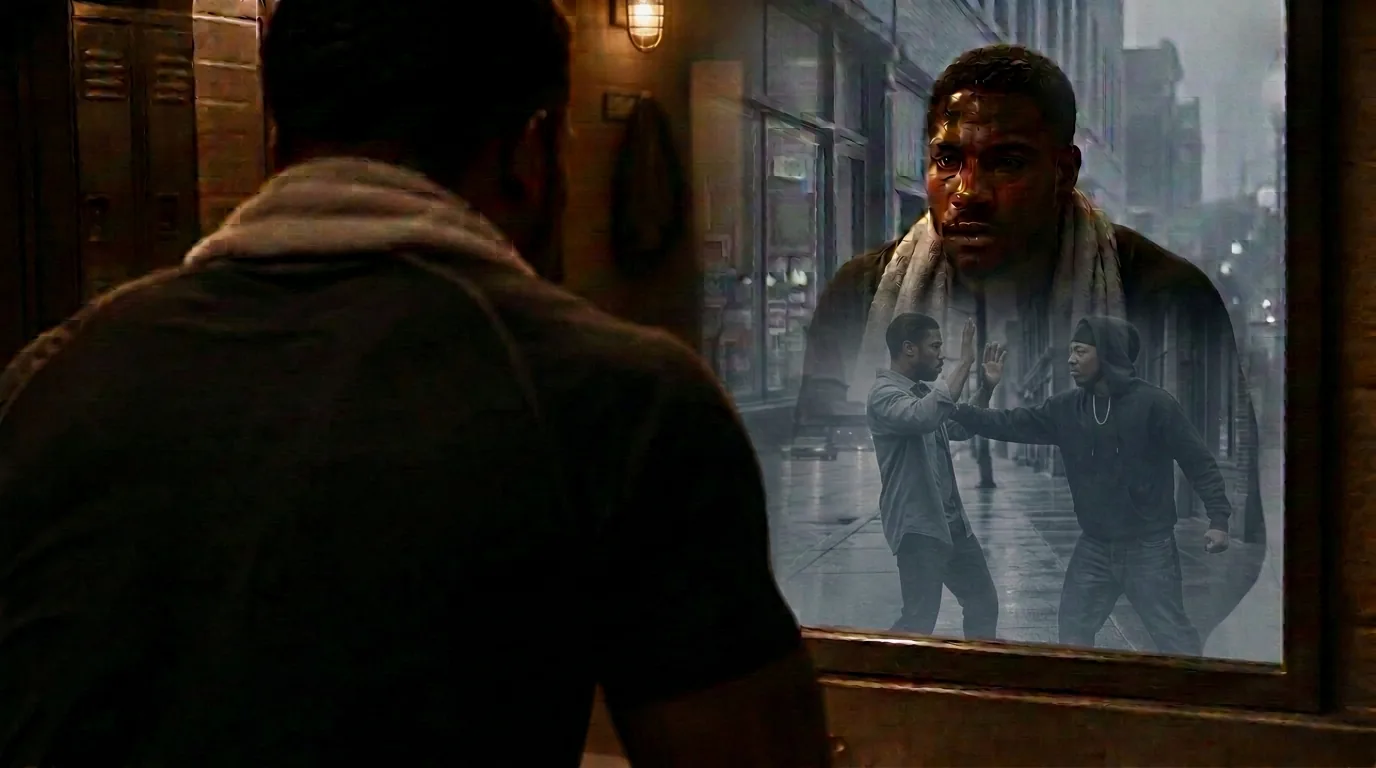
Consider this not just as range instruction, but as a mirror held up to your daily life.
Ask yourself frankly:
- When someone cuts you off, do you feel an immediate urge to honk, gesture, or tailgate to prove a point?
- When a colleague, neighbor, or family member speaks sharply to you, does your response aim to resolve the tension—or to "win" the exchange?
- Do you view walking away from an ignorant encounter as a loss, or as an exercise of sovereign restraint?
If your default response to minor irritation is retaliation, you cannot expect to magically demonstrate poise under severe duress. The habits you build in low-stakes moments are the exact reflexes that will govern you when adrenaline hits 140 beats per minute.
A firearm, a defensive blade, or empty-hand skill cannot give you sound judgment. It cannot heal an insecure temper. It cannot teach you when to hold your tongue. A tool only multiplies the disposition of the person holding it.
If the heart is arrogant, brittle, and eager to prove itself, dangerous tools will eventually find a catastrophe to author. But if the heart is anchored in humility, vigilance, and reverence for human life, every tool remains what it was intended to be: a last-resort shield for the innocent, kept in reserve while wisdom does the heavy lifting.
The Core Conviction
At Sling & Stone, our motto is not a decorative slogan. It is the operating premise of everything we teach:
"It's What's In The Heart, Not The Hands."
Train your hands until your weapon manipulation and fundamentals are second nature. But guard your heart with twice the diligence. The most formidable protector on any Chicago street is not the one looking for a reason to prove what they know—it is the one whose spirit is so well-governed that they can extinguish a fire before the first match is even struck.
Ready to train with us?
Reserve your seat in an upcoming class or request a private session.
Register for Training